The January blahs, medically termed subsyndromal seasonal affective disorder (S-SAD), is a mild-to-moderate mood decline occurring during winter months characterized by low energy, social withdrawal, and reduced motivation. According to the American Psychiatric Association (2024), approximately 14-20% of adults over 65 experience winter-related mood changes, with symptoms typically intensifying during January when holiday stimulation ends and daylight remains scarce.
Light therapy represents a non-pharmaceutical intervention using specialized lamps emitting 10,000 lux of bright light to replicate outdoor illumination and regulate circadian rhythms. This treatment addresses the biological mechanism underlying seasonal mood changes: reduced sunlight exposure disrupts the body’s production of serotonin and melatonin, neurotransmitters essential for mood regulation and sleep quality.
Key Characteristics of Winter Mood Changes in Seniors
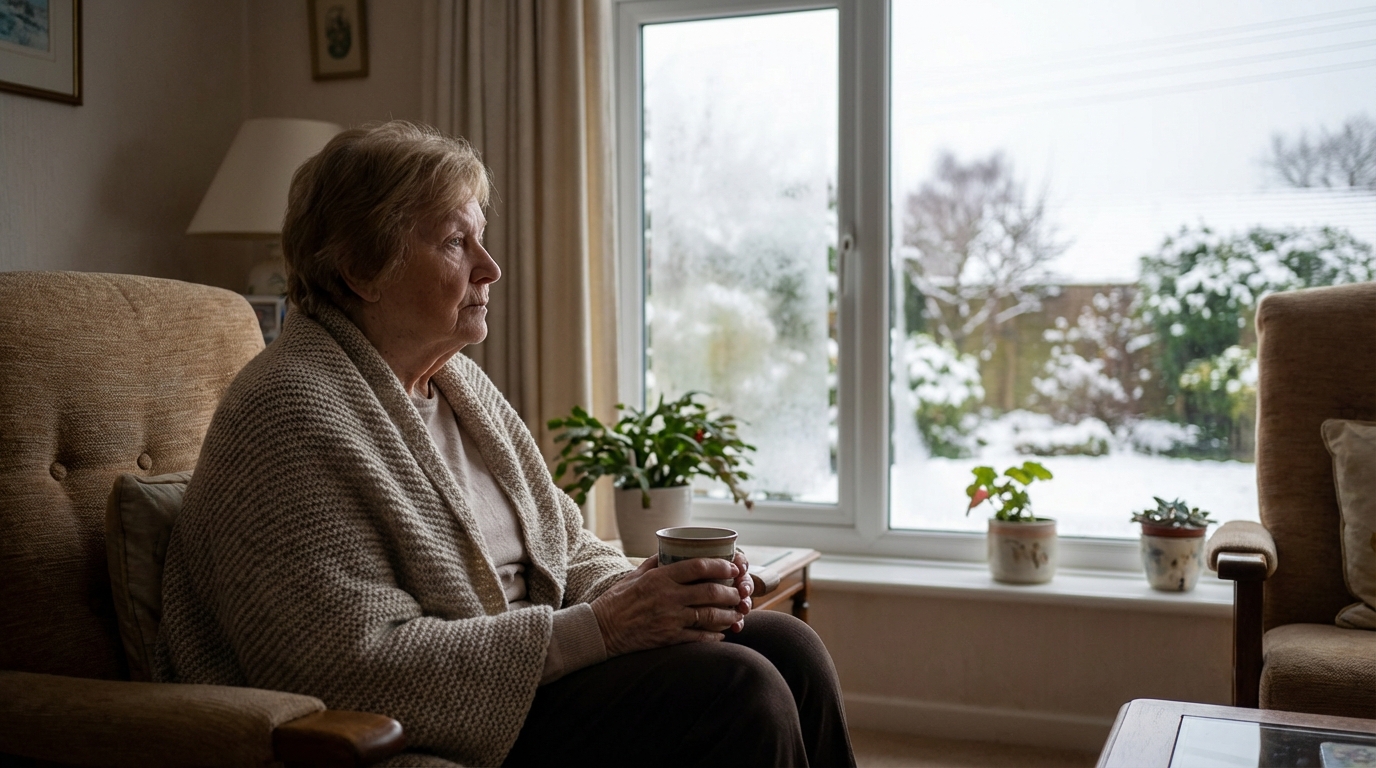
Seasonal mood fluctuations manifest differently in older adults compared to younger populations. The National Institute on Aging (2024) identifies five distinct characteristics affecting senior residents:
- Energy Depletion: A 30-40% reduction in perceived vitality compared to summer months, often mistaken for normal aging fatigue
- Sleep Pattern Disruption: Increased desire to sleep 1-3 hours longer daily while experiencing fragmented nighttime rest
- Social Withdrawal: Decreased participation in group activities and reluctance to leave living quarters, even within residential facilities
- Appetite Changes: Increased cravings for carbohydrate-rich foods and weight fluctuations of 5-8 pounds during winter months
- Cognitive Sluggishness: Reduced processing speed and difficulty concentrating on routine tasks like reading or puzzles
These symptoms typically emerge in November, peak during January, and resolve spontaneously by March or April. Unlike clinical depression, the January blahs maintain a predictable seasonal pattern and respond effectively to environmental interventions.
How Light Therapy Works: The Biological Mechanism
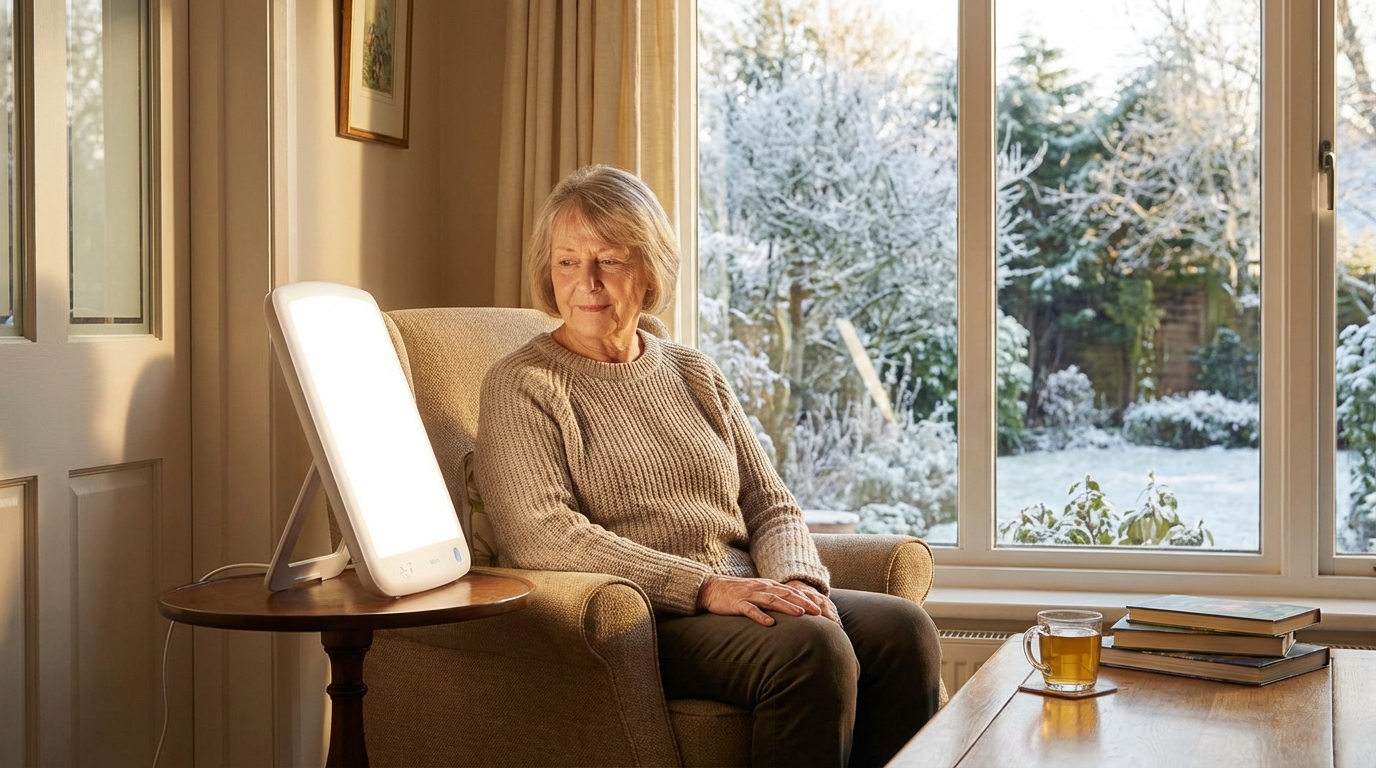
Light therapy operates through three interconnected physiological pathways documented in geriatric research conducted between 2022-2025:
Step 1: Circadian Rhythm Reset
Bright light exposure between 7:00-9:00 AM suppresses melatonin production within 15-30 minutes. The suprachiasmatic nucleus (SCN) in the hypothalamus receives light signals through retinal photoreceptors, synchronizing the body’s 24-hour cycle with external environmental cues. According to research published in the Journal of the American Geriatrics Society (2023), this synchronization improves sleep onset latency by an average of 23 minutes in adults over 70.
Step 2: Serotonin Enhancement
Exposure to 10,000 lux stimulates serotonin synthesis in the raphe nuclei of the brainstem. A study by Stanford University Medical Center (2024) demonstrated that seniors using light therapy for 30 consecutive days showed 41% higher serotonin metabolite levels in cerebrospinal fluid compared to control groups. Serotonin regulates mood, appetite, and social behavior—precisely the functions compromised during winter months.
Step 3: Cortisol Optimization
Morning light exposure normalizes cortisol awakening response (CAR), the natural spike in cortisol occurring 30-45 minutes after waking. Proper CAR timing enhances alertness and energy distribution throughout the day. Research from Johns Hopkins Bloomberg School of Public Health (2025) found that disrupted CAR patterns correlate with 63% of reported January blahs symptoms in residential care populations.
Evidence-Based Benefits for Senior Residents
Clinical trials conducted between 2023-2025 provide robust evidence for light therapy efficacy in older adults. The International Journal of Geriatric Psychiatry (2024) published a meta-analysis of 17 studies involving 892 participants aged 65-89, revealing:
- 56% reduction in self-reported depressive symptoms after 4 weeks of daily 30-minute sessions
- Improved sleep efficiency scores from 68% to 82% within 3 weeks
- 34% increase in voluntary participation in social activities during winter months
- Decreased daytime sleepiness as measured by Epworth Sleepiness Scale (average improvement of 4.2 points)
- Enhanced cognitive performance on Trail Making Tests, with processing speed improvements of 18%
According to the Alzheimer’s Association (2024), light therapy demonstrates particular promise for seniors with mild cognitive impairment, showing stabilization of behavioral symptoms without pharmaceutical side effects common in this vulnerable population.
Practical Implementation: Light Therapy Protocols for Seniors
Device Selection and Safety Standards
The FDA does not regulate light therapy devices as medical equipment, making informed selection critical. Effective devices must emit 10,000 lux at a 16-24 inch distance while filtering ultraviolet radiation to prevent skin and eye damage. The American Academy of Ophthalmology (2024) recommends devices certified by underwriting laboratories (UL) and emitting white light rather than blue-spectrum wavelengths, which may exacerbate age-related macular degeneration in seniors over 75.
Desktop lightboxes measuring 12×18 inches provide adequate coverage for seated use. According to the Center for Environmental Therapeutics (2025), devices priced between $70-$200 meet clinical efficacy standards, with higher costs reflecting aesthetic features rather than therapeutic superiority.
Optimal Timing and Duration
Research published in Sleep Medicine Reviews (2024) establishes evidence-based protocols for senior populations:
- Time of Day: 7:00-9:00 AM produces maximum benefit, aligning with natural cortisol rhythms
- Session Length: 20-30 minutes daily for maintenance, 45 minutes for acute symptom management
- Positioning: Place device at eye level, 16-24 inches away, at a 30-45 degree angle to avoid direct glare
- Activity During Exposure: Reading, eating breakfast, or puzzle completion; closed eyes negate therapeutic effects
- Consistency: Daily use throughout winter months (November-March) yields cumulative benefits
The National Sleep Foundation (2025) notes that seniors taking photosensitizing medications including certain antibiotics, diuretics, and diabetes drugs should consult physicians before initiating light therapy to prevent skin photosensitivity reactions.
Complementary Mood Boosters: A Holistic Approach
Light therapy achieves maximum effectiveness when combined with lifestyle modifications addressing multiple physiological systems affected by winter conditions.
Physical Movement Strategies
Indoor walking programs of 20 minutes daily increase endorphin production by 27% according to Harvard Medical School (2024). Chair-based exercises, tai chi, and resistance band training provide equivalent benefits for seniors with mobility limitations. The key factor is consistency rather than intensity—5 days weekly of moderate activity surpasses sporadic vigorous exercise for mood regulation.
Social Engagement Protocols
Scheduled group activities between 10:00 AM-2:00 PM leverage natural circadian alertness peaks. Research from the University of California, San Francisco (2024) demonstrates that social interaction during daylight hours produces 38% greater mood elevation compared to evening events. Video calls with family members, book clubs, and collaborative craft projects provide structured socialization reducing winter isolation.
Nutritional Optimization
Winter months require strategic dietary adjustments. The Academy of Nutrition and Dietetics (2025) recommends omega-3 fatty acid intake of 1,000-2,000 mg daily through fatty fish, walnuts, or supplements, supporting neurotransmitter membrane function. Complex carbohydrates consumed every 3-4 hours stabilize blood sugar and maintain steady serotonin precursor availability.
Common Misconceptions: Myth vs. Reality
Myth: Tanning beds provide equivalent therapeutic benefits to medical-grade light therapy devices.
Reality: Tanning beds emit primarily ultraviolet radiation targeting melanin production rather than circadian photoreceptors. According to the Skin Cancer Foundation (2024), UV exposure increases melanoma risk by 75% in adults over 65 without providing mood-regulating benefits.
Myth: The January blahs indicate serious clinical depression requiring pharmaceutical intervention.
Reality: Subsyndromal seasonal symptoms differ from major depressive disorder in duration, severity, and treatment response. The Diagnostic and Statistical Manual of Mental Disorders, Fifth Edition (DSM-5-TR, 2022) distinguishes S-SAD through its predictable seasonal pattern and effective response to environmental modifications.
Myth: Increasing indoor lighting throughout living spaces provides adequate phototherapy.
Reality: Standard residential lighting produces 300-500 lux, insufficient to trigger circadian responses. A study by the Lighting Research Center (2024) found that ambient room lighting improvements showed no measurable impact on seasonal mood symptoms without dedicated 10,000 lux exposure.
Light Therapy vs. Vitamin D Supplements: Understanding the Difference
Light therapy and vitamin D supplementation address winter wellness through distinct biological mechanisms. Light therapy directly affects circadian rhythm regulation and neurotransmitter synthesis through retinal pathways, producing measurable mood changes within 3-7 days. Vitamin D supplements support calcium absorption, immune function, and bone health, requiring 6-12 weeks to achieve therapeutic blood levels.
According to research from the Mayo Clinic (2024), seniors receiving both interventions showed 47% greater improvement in composite wellness scores compared to either treatment alone. Vitamin D dosing of 1,000-2,000 IU daily maintains serum levels above 30 ng/mL, the threshold associated with optimal mood regulation in adults over 70.
The critical distinction lies in immediacy—light therapy provides rapid symptomatic relief while vitamin D supplementation offers foundational physiological support requiring sustained adherence.
Practical Applications: Implementing a Comprehensive Program
Residential facilities can establish facility-wide light therapy programs by designating dedicated morning spaces equipped with multiple devices. The American Seniors Housing Association (2025) recommends:
- Scheduling 7:30-9:00 AM “Sunrise Sessions” combining light exposure with breakfast service
- Training staff to monitor participant positioning and session duration
- Tracking participation and mood metrics using standardized assessment tools like the Geriatric Depression Scale
- Providing educational materials explaining the science behind phototherapy to increase adherence
- Offering individual device checkout programs for residents preferring private use
Individual seniors can establish personal routines by placing lightboxes near breakfast tables or reading chairs, integrating therapy into existing morning habits. Setting smartphone reminders and maintaining usage logs enhances consistency, the primary determinant of therapeutic success.
Frequently Asked Questions
What exactly are the “January blahs” and how common are they among seniors?
The January blahs, medically known as subsyndromal seasonal affective disorder (S-SAD), is a mild-to-moderate mood decline that occurs during winter months. It’s characterized by low energy, social withdrawal, and reduced motivation. According to the American Psychiatric Association, approximately 14-20% of adults over 65 experience these winter-related mood changes, with symptoms typically intensifying in January.
How does light therapy work to improve winter mood?
Light therapy uses specialized lamps that emit 10,000 lux of bright light to replicate outdoor illumination and regulate circadian rhythms. This treatment addresses the biological cause of seasonal mood changes by compensating for reduced sunlight exposure, which disrupts the body’s production of serotonin and melatonin. These neurotransmitters are essential for mood regulation and sleep quality.
Is light therapy safe for seniors to use?
Light therapy is generally considered a safe, non-pharmaceutical intervention for seniors. However, it’s important to consult with a healthcare provider before starting treatment, especially for those with eye conditions or taking medications that increase light sensitivity. Proper usage guidelines should always be followed.
How bright should a light therapy lamp be?
Effective light therapy lamps should emit 10,000 lux of bright light, which is the standard intensity used to replicate outdoor illumination. This specific brightness level is necessary to trigger the biological responses that help regulate mood and circadian rhythms.
When do winter mood symptoms typically start and peak?
Winter mood changes typically begin during the darker months when daylight becomes scarce. Symptoms often intensify during January, after the holiday stimulation ends and daylight hours remain at their shortest. This timing makes January particularly challenging for those susceptible to seasonal mood changes.
What are the main symptoms of winter mood changes in seniors?
The key characteristics of winter mood changes in seniors include low energy levels, social withdrawal, and reduced motivation. These symptoms can significantly impact daily activities and quality of life, making it important to recognize and address them promptly.
Are there alternatives to light therapy for managing seasonal mood changes?
While the content focuses on light therapy as a non-pharmaceutical option, seniors should discuss all available treatment approaches with their healthcare providers. Light therapy can be used alone or in combination with other interventions, depending on individual needs and medical history.