
Outcome: Successfully initiate and navigate a productive conversation with a resistant elderly parent about assisted living options within 2-4 weeks. Difficulty level: Advanced. This sensitive discussion requires emotional intelligence, preparation, and patience as you address aging parent conversations while respecting elderly independence.
Before You Begin: Prerequisites Checklist
- Document specific safety concerns (fall risk, medication management issues, unsafe living conditions elderly parent)
- Assess cognitive decline signs and activities of daily living (ADLs) limitations
- Research senior living options and costs in your parent’s area
- Review Medicare, Medicaid, and long-term care insurance coverage
- Consult with primary care physician about parent’s current health status
- Identify potential allies (family member, trusted friends, social worker)
- Prepare emotionally for parent-child role reversal dynamics
- Have power of attorney or healthcare proxy documents reviewed
Step 1: Assess the Situation Objectively (Timeline: 1-2 Weeks)
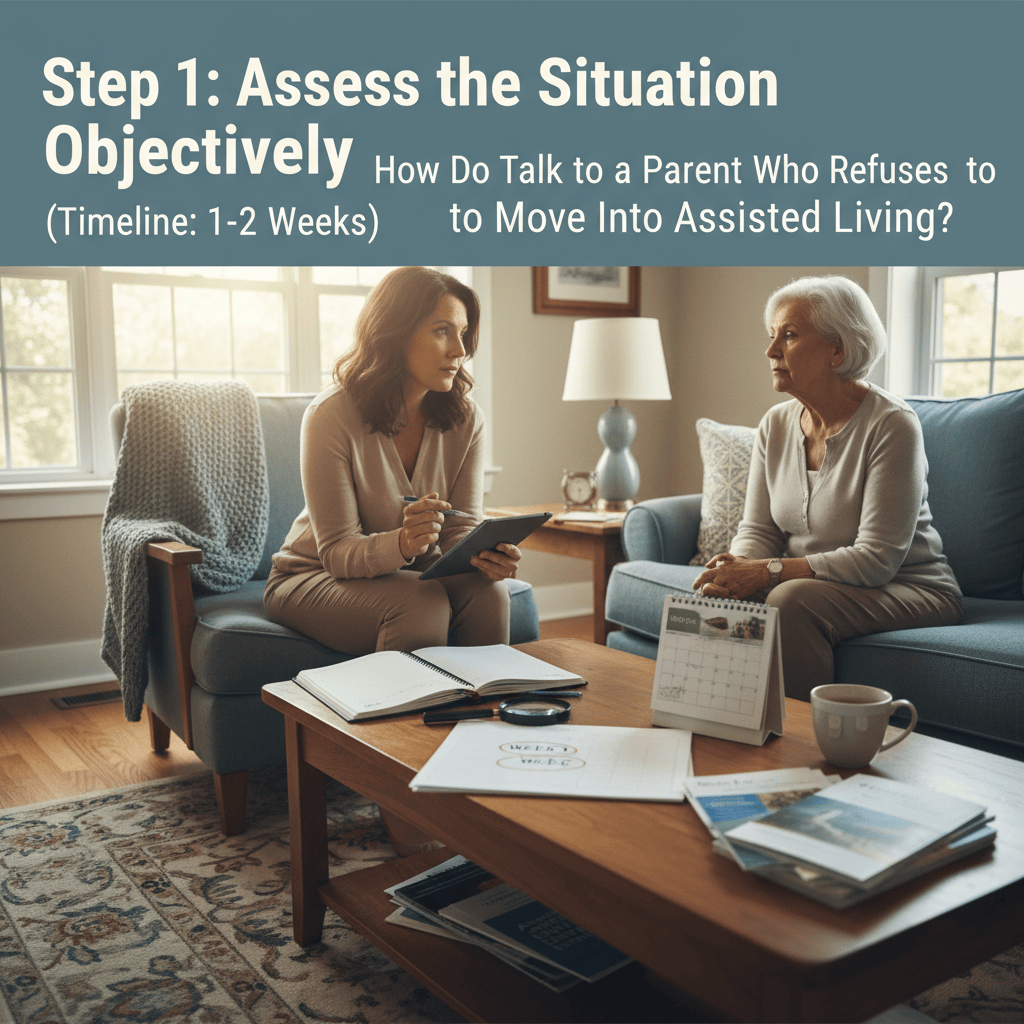
According to the National Institute on Aging (2024), objective evaluation precedes effective intervention. Begin by documenting specific incidents that indicate your parent can no longer live alone safely. Focus on instrumental activities of daily living (IADLs) such as managing finances, transportation, and household maintenance.
Create a written log of concerning behaviors: elderly parent falling frequently refuses help, parent forgetting medications refusing help, or elderly parent not eating properly. Note dates, times, and circumstances. This evidence-based approach reduces emotional arguments and provides concrete examples during discussions about senior living resistance.
Conduct a home safety evaluation examining mobility issues, medication adherence, chronic disease management, and elderly nutrition. Look for expired food, unpaid bills, missed medical appointments, and physical hazards. Consider hiring an occupational therapist for a professional geriatric assessment to identify fall prevention needs and capacity concerns.
Key Assessment Areas:
- Physical safety: Fall history, burn marks, bruises, home hazards
- Cognitive function: Memory lapses, confusion, wandering, dementia or Alzheimer’s disease symptoms
- Self-care capacity: Personal hygiene, meal preparation, medication management
- Social engagement: Isolation, depression in elderly, withdrawal from activities
- Financial management: Unpaid bills, unusual purchases, scam vulnerability
Step 2: Prepare for the Conversation (Timeline: 3-5 Days)
Timing determines success in difficult conversations elderly. Avoid discussing elderly parent refusing care immediately after an incident when emotions run high. Select a calm moment when your parent feels physically comfortable and mentally alert. According to geriatric communication experts (2024), mid-morning conversations yield better outcomes than late-day discussions.
Align family members beforehand to prevent sibling conflict parent care. When adult children caregivers present contradictory messages, resistant aging parents exploit disagreements. Hold a family meeting to establish unified talking points about senior care facilities and elder care solutions.
Choose a familiar, comfortable setting—your parent’s home typically works best. Eliminate distractions: turn off television, silence phones, and ensure privacy. If managing long-distance caregiving, schedule a dedicated in-person visit rather than discussing via phone.
Conversation Preparation Checklist:
- Research three specific assisted living facility options with costs
- Prepare printed materials about senior living communities
- List specific safety concerns with dates and examples
- Identify your parent’s priorities (independence, social connection, quality of life)
- Plan opening statements focusing on love and concern, not criticism
Step 3: Initiate Dialogue with Empathy (Timeline: 1-2 Hours)
Start the conversation by acknowledging your parent’s feelings and respecting elderly wishes. Use phrases like “I’ve noticed some changes that concern me” rather than accusatory statements. According to research on aging parent communication (2023), validation precedes persuasion.
Practice active listening when addressing parent’s fears about assisted living. Allow your parent to express concerns about losing independence, leaving their family home, or loss of independence without interruption. Reflect their emotions: “I understand you’re worried about autonomy and dignity.”
Present your concerns using “I” statements: “I feel anxious when I think about you managing stairs alone after your recent falls.” Share specific documented incidents from your assessment log. Avoid generalities like “You can’t take care of yourself anymore,” which trigger defensiveness in a stubborn elderly parent.
Introduce the concept of senior living options as an exploration, not a demand. Say “Let’s look at some possibilities together” rather than “You need to move to assisted living.” This approach respects parent’s rights versus safety concerns while opening dialogue about aging parent support.
Step 4: Present Options and Information (Timeline: Ongoing)
Educate yourself and your parent about the spectrum of senior housing decisions. Many elderly parents equate assisted living with nursing home facilities, creating unnecessary resistance to assisted living. Clarify distinctions between independent living, assisted living facility environments, memory care unit options, and continuing care retirement community (CCRC) models.
Describe assisted living benefits including 24-hour support, professional caregivers, medication management, nutritious meals, transportation, and elderly socialization opportunities. Emphasize how quality senior care enhances rather than diminishes quality of life.
Present aging in place alternatives if your parent remains unwilling: home health aide services, adult day care, in-home care modifications, or respite care options. Organizations like Lantern Crest Senior Living offer consultations that help families understand various elder care solutions and senior community amenities available in their area.
Discuss senior care costs transparently. Review Medicare coverage limitations, Medicaid planning requirements, and long-term care insurance benefits. Contact your Area Agency on Aging for financial assistance information and senior placement services.
Information-Sharing Strategies:
| Approach | Method |
|---|---|
| Visual Learning | Tour senior care facilities together, watch virtual tours online |
| Peer Influence | Arrange conversations with friends already in senior living communities |
| Written Materials | Provide brochures highlighting activities, amenities, and resident testimonials |
| Professional Input | Request physician discuss senior safety concerns during appointments |
Step 5: Address Specific Objections (Timeline: Ongoing)
When your parent denies needing assisted living, identify the underlying fear. Common objections include emotional attachment to home elderly parent, parent worried about losing independence, financial concerns, or fear of abandonment.
Objection: “I’m fine living alone”
Response: Present documented examples without judgment. “I’ve noticed you’ve had three falls in two months, and last week you forgot to turn off the stove twice. These specific incidents make me concerned about your safety.”
Objection: “You just want to put me away”
Response: Validate emotions and reframe. “I understand this feels like we’re taking control from you. Actually, moving to a place with support available means you can maintain independence longer because you’ll have help when you need it.”
Objection: “I can’t afford it”
Response: Provide concrete financial analysis. “We’ve reviewed your finances with an elder law attorney. Between selling your house, your long-term care insurance, and Medicaid coverage, we can cover costs at these three facilities.”
Objection: “I don’t want to leave my home”
Response: Acknowledge attachment and offer compromise. “I know this house holds 40 years of memories. What if we toured some communities together, and you could bring your favorite furniture and photos to make your new space feel like home?”
Step 6: Involve Professional Support (Timeline: 1-3 Weeks)
When family intervention elderly efforts stall, professional third parties provide credibility and expertise. A geriatric care manager conducts comprehensive capacity assessment and recommends appropriate elder care solutions based on medical and psychosocial factors.
Request your parent’s primary care physician address senior safety concerns during appointments. Many resistant aging parents respect medical authority more than family caregiver opinions. The physician can document cognitive decline, mobility issues, and chronic illness management challenges requiring assisted living transition support.
Consult a social worker specializing in elderly parent care for family mediation. These professionals facilitate difficult conversations, helping navigate parent-child dynamics aging while reducing family caregiver stress. They also connect families with rehabilitation services, adult protective services, and community resources.
If your parent lacks capacity refuses assisted living and poses immediate danger, consult an elder law attorney about guardianship or conservatorship proceedings. According to legal experts (2024), courts prioritize least restrictive interventions, often mandating professional care evaluations before granting authority.
Step 7: Explore Compromise Solutions (Timeline: 2-4 Weeks)
Overcoming senior resistance often requires incremental steps rather than immediate relocation. Propose a trial period assisted living reluctant parent arrangement: “Let’s try assisted living for three months. If you’re truly unhappy, we’ll explore other options.”
Start with respite care or adult day care several days weekly, gradually increasing as your parent adjusts. This proactive aging discussions approach demonstrates that senior living transition doesn’t mean complete loss of autonomy.
Involve your parent in decision-making wherever possible. Let them choose which senior care facilities to tour, what furniture to bring, or which activities interest them. According to gerontology research (2023), perceived control significantly improves senior relocation stress outcomes and overall quality senior care acceptance.
Consider compromise with parent refusing assisted living through enhanced home health services initially. Hire professional caregivers for medication management, meal preparation, and transportation while continuing conversations about long-term care planning.
Troubleshooting Common Scenarios
If your parent becomes angry during discussions: Pause the conversation. Say “I can see this is upsetting you. Let’s take a break and talk again tomorrow.” Avoid arguing when emotions escalate. Return to the topic after both parties calm down.
If your parent refuses all suggested options: Focus on immediate safety modifications. Install grab bars, arrange meal delivery, and hire occasional help. Document continued concerns and revisit conversations monthly. Sometimes crisis intervention elderly following an emergency creates necessary momentum.
If siblings disagree about intervention timing: Arrange family meeting with geriatric care manager facilitating. Professional assessment often resolves family disagreements elderly care by providing objective evaluation of parent can no longer live alone indicators.
If your parent shows signs of dementia refusing assistance: Recognize that parent with dementia refuses assisted living due to compromised judgment. Work with healthcare providers on capacity assessment. If dementia significantly impairs decision-making, healthcare proxy or guardianship may become necessary to ensure safety.
If you experience caregiver guilt about “forcing” the move: Reframe your role. You’re not forcing parent into care; you’re fulfilling elderly care responsibilities by ensuring safety. Seek family caregiver support groups and remember that balancing safety and autonomy elderly parent sometimes requires difficult decisions prioritizing wellbeing over preferences.
Legal Considerations When Capacity Is Compromised
When elderly parent refuses help living alone despite demonstrable incapacity, legal intervention may become necessary. Review existing advance care planning documents including living will, healthcare directive, and durable power attorney for guidance on healthcare decision making authority.
If no advance directives exist and your parent cannot make safe decisions, consult an elder law attorney about guardianship proceedings. Courts require medical evidence of incapacity and proof that less restrictive alternatives failed. Document all attempts at voluntary placement before pursuing legal options when parent refuses care.
Adult protective services investigate situations involving self-neglect or exploitation. While involvement seems drastic, these agencies provide resources and sometimes persuade resistant parents when family efforts fail. They can also facilitate emergency placement during aging parent emergencies threatening immediate safety.
Next Steps and Follow-Up Recommendations
After initial conversations, continue regular dialogue about senior living decisions. Share positive stories about elderly socialization and senior community amenities. Arrange visiting assisted living with hesitant parent to tour facilities during activities, showing parent benefits of assisted living through firsthand observation.
Schedule follow-up discussions every 2-3 weeks, monitoring for changes in cognitive function, physical ability, or safety incidents that strengthen the case for transition. Keep detailed records supporting ongoing assessment of whether intervention timing has arrived.
Connect with sandwich generation support groups addressing the unique challenges of caring for aging parents while managing other responsibilities. Organizations specializing in elderly parent burden provide strategies for maintaining your own wellbeing during this stressful process.
Develop contingency plans for various scenarios: gradual acceptance, continued resistance, or emergency placement needs. Having multiple strategies prepared reduces stress when situations evolve unpredictably.
Remember that talking to resistant elderly parent about care represents an ongoing process, not a single conversation. Success means keeping dialogue open, maintaining relationships, and ensuring safety—even when timelines extend longer than anticipated. Your persistence in addressing these challenging elderly parent relationship dynamics ultimately demonstrates profound love and commitment to their dignity, autonomy, and quality of life.