Assisted Living Facilities provide personal care services and daily living assistance to seniors who remain largely independent, while Memory Care Units offer specialized dementia care services in secure environments designed specifically for individuals with Alzheimer’s Disease, dementia, or significant cognitive impairment. According to the Alzheimer’s Association (2024), approximately 6.9 million Americans aged 65+ live with Alzheimer’s, making this distinction critical for families evaluating senior housing options.
Why Understanding Senior Care Levels Matters
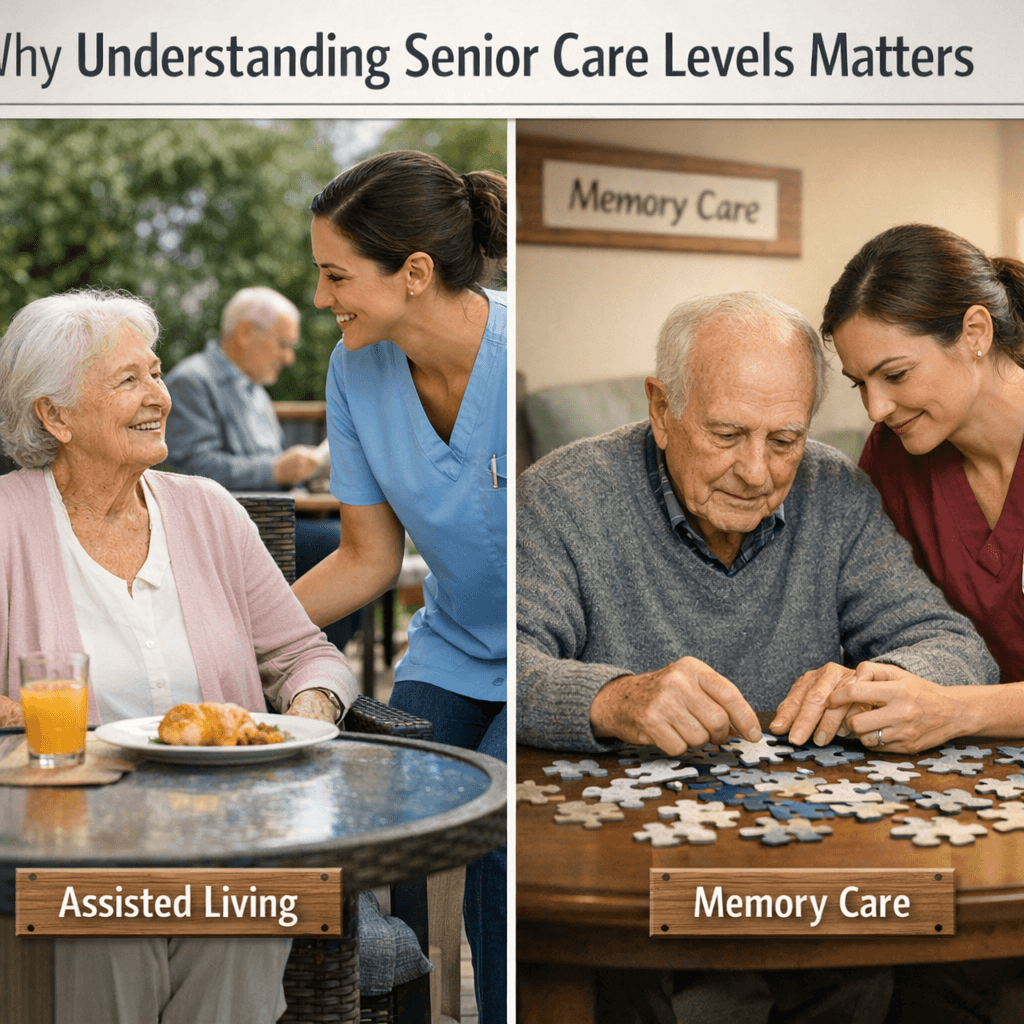
The choice between assisted living vs memory care represents one of the most consequential decisions families face during age-related decline. Assisted Living Residences serve seniors needing help with Activities of Daily Living (ADLs) like meal preparation services, mobility support, and medication supervision while maintaining cognitive function. Memory Care Directors oversee specialized care approaches addressing progressive memory loss, behavioral issues, and wandering prevention through structured daily schedules and therapeutic interventions.
Unlike Independent Living or Continuing Care Retirement Communities (CCRCs), both options provide supervised care environments. However, the care intensity, staff training requirements, and safety features differ substantially based on cognitive support programs needed.
Key Characteristics of Assisted Living Services
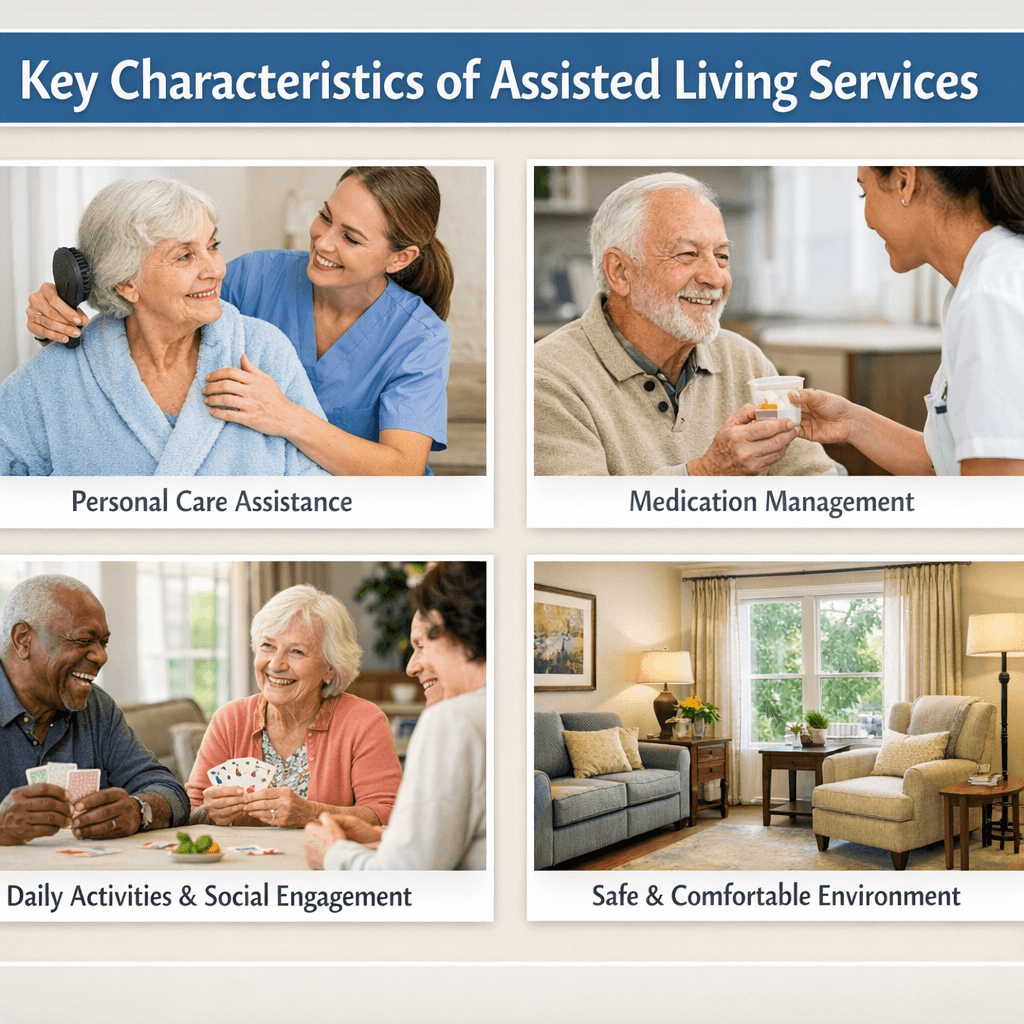
Assisted Living Communities focus on supporting senior independence while providing necessary daily living assistance. Residents typically exhibit mild cognitive impairment or none at all.
Staffing and Care Delivery
Licensed Care Staff including Certified Nursing Assistants (CNAs) and Registered Nurses develop individualized Care Plans addressing each resident’s Level of Care requirements. Care Coordinators conduct regular Care Assessments to adjust Personal Care Services as needs evolve. Staff ratios in memory care vs assisted living differ significantly, with memory care requiring higher supervision levels.
Environment and Activities
Residents enjoy access to Social Activities, companionship services, and community spaces promoting social engagement opportunities. The environment resembles residential care with Private Rooms or Shared Rooms in non-secured facilities. Activity programming emphasizes maintaining existing abilities rather than cognitive therapy programs.
Medical Support
Healthcare Providers offer medication management, health oversight, and chronic condition management. However, assisted living facilities typically cannot handle advanced behavioral management or extensive medical monitoring required for moderate-to-severe dementia stages.
Key Characteristics of Memory Care Facilities
Memory Care Units provide dementia-friendly design within Secure Facilities specifically addressing cognitive decline progression and neurological disorders.
Specialized Training and Staffing
Dementia specialists and geriatric specialists receive specialized training in managing sundowning, memory loss patterns, and behavioral issues. The care team approach employs interdisciplinary care methods, with staff certification requirements exceeding standard custodial care services. Memory care staff undergo continuous education in therapeutic interventions and brain health programs.
Security and Safety Features
Secured Units feature exit control systems, wandering management technology, and enclosed courtyards creating safe wandering areas. These locked units prevent residents from leaving unsupervised while maintaining familiar surroundings that reduce anxiety. Safety and security features include door alarms, monitoring systems, and secure living environment protocols.
Therapeutic Programming
Memory enhancement activities incorporate cognitive stimulation through structured routines. Therapeutic environment design uses consistency in care approaches, resident-centered care philosophy, and memory support techniques. Programs address each dementia stage with tailored services including cognitive care exercises and routine establishment practices.
How Assisted Living Works
Admission to Senior Living Communities begins with care level assessment by geriatric care professionals. Healthcare providers evaluate ADL capabilities including bathroom assistance, personal hygiene help, and mobility needs. Residents maintain independence while receiving non-medical care and supervision as needed. Family caregivers coordinate with care teams to establish flexible care options supporting aging in place when possible.
How Memory Care Works
Memory care admission requirements include cognitive testing confirming dementia vs Alzheimer’s diagnosis. The transition to memory care typically occurs when wandering, severe confusion, or behavioral challenges exceed assisted living capabilities. Therapeutic activities follow evidence-based protocols for Alzheimer’s care facilities. Daily routines in memory care facilities emphasize predictability, with consistent meal times, activity schedules, and caregiver interactions reducing cognitive load.
Common Misconceptions About Senior Care Comparison
Myth: Assisted living can handle dementia patients at any stage.
Reality: Can someone with dementia live in assisted living? Only during early-stage dementia with mild symptoms. Assisted living for mild cognitive impairment works well, but moderate-to-severe cases require specialized dementia units.
Myth: Memory care simply means locked doors.
Reality: Memory care for early stage dementia encompasses comprehensive cognitive support programs, behavioral management strategies, and therapeutic environment modifications beyond physical security.
Myth: You cannot transition from memory care to assisted living.
Reality: While rare, can you transition from memory care to assisted living if cognitive function stabilizes through treatment. Care progression planning allows movement along the continuum of care.
Myth: Costs are similar between options.
Reality: Why is memory care more expensive? Specialized staff training, higher staff-to-resident ratios, secure facilities, and therapeutic interventions increase memory care costs significantly above assisted living costs.
Assisted Living vs Memory Care: Direct Comparison
| Feature | Assisted Living | Memory Care |
|---|---|---|
| Cognitive Requirements | Intact or mildly impaired | Moderate to severe impairment |
| Security | Open community | Locked, secured unit |
| Staff Training | Basic personal care | Dementia-specific certification |
| Average Monthly Cost | $4,500-$6,500 | $6,500-$9,500 |
| Staff-to-Resident Ratio | 1:15-20 | 1:6-8 |
| Activity Focus | Social engagement, independence | Cognitive stimulation, routine |
| Medicare Coverage | Limited (not custodial care) | Limited (not custodial care) |
| Medicaid Availability | Some states through waivers | Some states through waivers |
When to Transition From Assisted Living to Memory Care
Signs you need memory care instead of assisted living include persistent wandering, aggressive behavior, failure to recognize dangerous situations, frequent disorientation in familiar settings, and inability to follow daily routines. When to move from assisted living to memory care depends on safety concerns and care intensity requirements exceeding assisted living capabilities.
Combined assisted living and memory care communities offer continuum of senior care options, allowing couples to remain in the same facility when one spouse requires specialized care. Respite care and short-term stays provide family caregiver support during care transition planning.
Practical Applications: Choosing Between Elderly Care Facilities
How to choose between assisted living and memory care starts with honest assessment of cognitive function. Do I need assisted living or memory care? If your loved one experiences significant memory loss, behavioral challenges, or safety concerns from wandering, memory care provides appropriate supportive living. For seniors needing help with ADLs but maintaining cognitive abilities, assisted living offers sufficient care.
Consider retirement communities, senior apartments, and nursing home alternatives as part of comprehensive elder care planning. Veterans benefits for memory care and veterans benefits for assisted living may offset costs. Board and care homes and adult foster care represent additional residential care options for specific situations.
Family-centered care approaches encourage family education about dementia progression, ensuring timely transitions supporting quality of life while maintaining safety in appropriate therapeutic environments.