
Independent living is a senior housing option for active older adults who need no daily personal care, while assisted living provides housing plus help with activities of daily living (ADLs) such as bathing, dressing, and medication management. Both are types of senior living communities, but they sit at different points on the senior care continuum based on the level of care required. The right choice depends on a resident’s current health status, mobility, and need for supervision rather than age alone.
Why the Difference Matters

Choosing between independent living and assisted living affects cost, autonomy, and health outcomes. According to the CDC’s National Center for Health Statistics, an estimated 811,500 Americans lived in assisted living and similar residential care communities on any given day in 2016. Misidentifying the right level of care can lead to unsafe living conditions or unnecessary expense. Understanding this difference helps families and aging adults make informed senior care comparisons before a crisis forces a rushed decision. Many families begin researching senior housing only after a fall, hospitalization, or sudden health decline, which shows the value of planning ahead rather than reacting to an emergency.
Key Characteristics of Independent Living
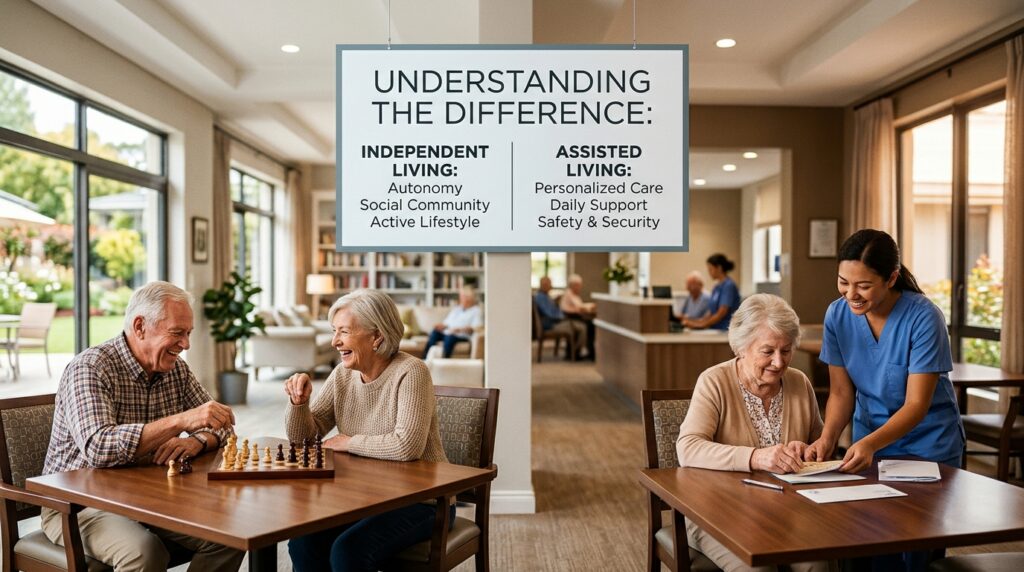
- No personal care assistance required: Residents manage all activities of daily living independently, including bathing, dressing, and medication schedules.
- Maintenance-free lifestyle: Housekeeping, landscaping, and home repairs are handled by staff, freeing residents from upkeep responsibilities.
- Social and recreational focus: Senior community amenities include fitness centers, dining halls, group outings, hobby clubs, and educational classes.
- Average age for independent living residents: Typically early to mid-80s, though some communities attract residents in their 70s.
- Housing variety: Options include apartments, cottages, and townhomes within an independent living community, often with one-, two-, or three-bedroom floor plans.
- Transportation and convenience: Many communities provide scheduled shuttles for shopping, medical appointments, and local events, reducing reliance on driving.
Key Characteristics of Assisted Living
- Personal care assistance: Staff help with bathing, dressing, grooming, and mobility, typically documented in a written service plan.
- Medication management: Trained or licensed staff administer or monitor prescriptions, reducing the missed-dose risks common among seniors managing multiple medications.
- 24-hour supportive living environment: Staff are on-site around the clock for safety and emergencies, including overnight check-ins.
- Structured care plans: Each resident receives an individualized assessment of their level of care needs, reviewed on a regular schedule.
- Health care services for seniors: Some assisted living facilities coordinate with home health care providers, physical therapists, or visiting nurses for additional clinical support.
- Safety infrastructure: Features such as grab bars, emergency call systems, and wheelchair-accessible layouts are standard in most assisted living buildings.
How Independent Living Works
- Tour and move-in: Prospective residents tour the community and select housing based on lifestyle preferences, budget, and desired amenities.
- Daily living: Residents cook, drive, and socialize without staff assistance, keeping the same autonomy as in a private home.
- Amenities access: Dining plans, transportation, and fitness programs support senior lifestyle goals and are often included in a flat monthly fee.
- Aging in place options: Many independent living communities offer add-on services, such as meal delivery or extra housekeeping, as needs grow. Some are part of a larger campus where residents can transition to assisted living without leaving the community.
How Assisted Living Works
- Care assessment: A nurse or care coordinator evaluates ADLs, cognitive status, and medical history before move-in, often requiring a physician’s statement.
- Personalized care plan: Staff outline specific assisted living services, such as bathing assistance, medication reminders, or incontinence care, matched to a tiered pricing structure.
- Daily support: Caregivers assist with dressing, hygiene, and mobility as needed, typically multiple times per day based on the care plan.
- Ongoing monitoring: Care levels are reassessed periodically, often every few months or after a hospitalization, to adjust services as health changes.
Common Misconceptions
Myth: Independent Living Is the Same as a Retirement Community
Reality: Independent living is one type of retirement community, but “retirement community” is a broader term. Some retirement communities are continuing care retirement communities (CCRCs), which combine independent living, assisted living, and skilled nursing care on one campus, allowing a single move for lifelong care.
Myth: You Can’t Stay in Independent Living If You Need Help Bathing
Reality: Many independent living residents hire outside caregivers or home health aides for limited personal care assistance, allowing them to remain in independent living longer before transitioning to assisted living. This arrangement, sometimes called “aging in place with support,” can delay a move by months or years depending on need.
Myth: Assisted Living Is the Same as a Nursing Home
Reality: Assisted living provides help with daily living for relatively healthy seniors. A nursing home (skilled nursing facility) provides 24-hour medical care for residents with chronic illness or post-surgical recovery needs. Nursing homes have licensed nurses on duty around the clock and a physician medical director, whereas assisted living primarily employs trained caregivers and medication aides.
Independent Living vs Assisted Living vs Other Senior Care Options
| Feature | Independent Living | Assisted Living | Nursing Home | Memory Care |
|---|---|---|---|---|
| Level of Care | None required | Moderate (ADL support) | High (medical/skilled) | High (cognitive-focused) |
| Staffing | Limited | 24-hour caregivers | 24-hour licensed nursing | 24-hour specialized staff |
| Typical Resident | Active, independent senior | Needs daily living assistance | Needs skilled nursing care | Dementia/Alzheimer’s diagnosis |
| Medicare Coverage | Not covered | Not covered | Covered for short-term rehab only | Not covered |
| Medicaid Coverage | Not covered | Varies by state | Often covered | Varies by state |
| Typical Monthly Cost | ~$3,800 (national average) | ~$5,900 (2024 national median) | ~$9,300–$10,650 (2024) | Typically higher than assisted living |
Cost Comparison: Independent Living vs Assisted Living
According to Genworth’s 2024 Cost of Care Survey, the national median cost for assisted living is approximately $5,900 per month. Independent living averages about $3,800 per month nationally, according to NIC data cited by the American Seniors Housing Association. Senior care costs vary by region, with California and the Northeast trending higher than national averages, especially once personal care tiers are added. Families comparing independent and assisted living in San Diego should request itemized pricing, since assisted living fees often include personal care assistance that independent living does not. When reviewing quotes, ask whether the price is all-inclusive or tiered by care level, as tiered pricing can add significantly to the monthly bill depending on how many ADLs require support.
How to Choose Between Independent Living and Assisted Living
Signs You Need Assisted Living Instead of Independent Living
- Difficulty managing medications without reminders
- Frequent falls or mobility challenges
- Needing help with bathing, dressing, or toileting
- Social isolation due to inability to drive or attend activities independently
- Family caregiver burnout from providing daily support
- Unexplained weight loss or missed meals due to difficulty cooking
- Noticeable decline in household cleanliness or personal hygiene
Benefits of Independent Living for Seniors
- Maintains autonomy and privacy
- Reduces home maintenance burdens
- Expands social engagement opportunities
- Often less expensive than assisted living
- Many communities provide a built-in safety net through on-site staff and emergency call systems
Transitioning from Independent Living to Assisted Living
Many seniors move from independent living to assisted living gradually, starting with part-time home health care support before fully transitioning. Continuing care retirement communities simplify this process because residents can move between care levels without changing campuses. Families should request a reassessment whenever a resident has a fall, a hospitalization, or a noticeable decline in self-care ability, since these events often trigger eligibility for a higher level of care.
Practical Applications
Families evaluating senior housing options should request a written care assessment, compare level-of-care documentation, and clarify which admission requirements apply at each assisted living facility, such as a physician’s evaluation or proof of specific ADL needs. Before touring communities, prepare a checklist covering current medications, mobility aids, recent hospitalizations, and dietary restrictions, since this information speeds up the admissions assessment. Elder law attorneys and geriatric care managers can help interpret Medicare and Medicaid eligibility, since neither program fully covers long-term custodial care in independent living or assisted living settings. A geriatric care manager charges by the hour but can save families significant time by identifying the appropriate care level quickly.
Frequently Asked Questions
What services are included in assisted living?
Assisted living typically includes housing, meals, housekeeping, transportation, medication management, and help with activities of daily living such as bathing, dressing, grooming, and mobility. Staff are on-site 24 hours a day, and each resident receives an individualized care plan that is reassessed periodically as health needs change.
Is independent living the same as a retirement community?
Independent living is one type of retirement community, designed for active seniors who don’t need daily personal care. “Retirement community” is a broader term that also includes continuing care retirement communities (CCRCs), which combine independent living, assisted living, and skilled nursing care on one campus.
How do I know if my parent needs assisted living?
Common signs include missed or confused medications, frequent falls, unexplained weight loss, declining hygiene, an unsafe or neglected home, and difficulty bathing or dressing. Family caregiver burnout is also a signal. After a fall or hospitalization, request a formal care assessment from a nurse or geriatric care manager.
What is the average age for independent living residents?
Most independent living residents are in their early to mid-80s, though some communities attract residents in their 70s. Age alone doesn’t determine eligibility. The deciding factor is whether a person can manage daily activities like bathing, dressing, and medications without help.
How much more does assisted living cost than independent living?
Assisted living costs about $2,100 more per month than independent living nationally. Genworth’s 2024 Cost of Care Survey puts the assisted living median at $5,900 per month, while independent living averages about $3,800 per month, according to NIC data cited by ASHA. Costs vary widely by location and care level.