Does Medicare Cover Assisted Living in California?

What Medicare Does Pay for While You Live in Assisted Living
Medicare doesn’t pay for the room or the personal care, but it still covers your medical needs while you live there. That includes:-
- Doctor and specialist visits, including telehealth (Part B)
-
- Lab work, imaging, and outpatient services (Part B)
-
- Durable medical equipment, such as walkers, wheelchairs, and hospital beds (Part B)
-
- Home health care, such as part-time skilled nursing or therapy, if you’re homebound and qualify. Your assisted living apartment counts as your home.
-
- Hospice care for residents with a terminal illness
-
- Prescription drugs, if you have a Part D plan or a Medicare Advantage plan with drug coverage
What About Skilled Nursing?
Medicare Part A can cover up to 100 days of care in a skilled nursing facility (SNF) after a qualifying inpatient hospital stay of at least three days. This care happens in a skilled nursing facility, not in assisted living. Medicare pays in full for the first 20 days. From day 21 through day 100, you pay a daily coinsurance. After day 100, coverage ends.Covered vs. Not Covered: Quick Comparison
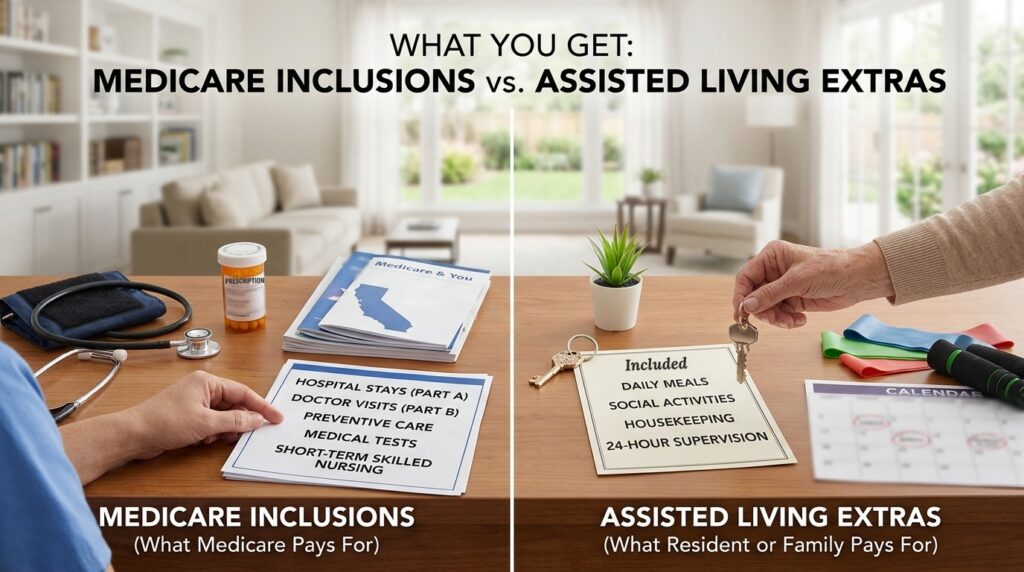
| Covered by Medicare | Not Covered by Medicare |
|---|---|
| Doctor visits, labs, and tests | Rent, or room and board |
| Short-term skilled nursing facility stay after a hospital stay | 24-hour supervision |
| Durable medical equipment | Meals and housekeeping |
| Hospice care | Help with bathing, dressing, and medications |
| Home health care for homebound residents | Memory care programs |
How Much Does Assisted Living Cost in California?
California is one of the most expensive states for assisted living. In the most recent Genworth/CareScout state data (2024), California’s median for a private one-bedroom unit was about $7,350 a month, or $88,200 a year, roughly 25% above the national median. Nationally, the 2025 median rose to $6,200 a month. Costs also vary by care type and region:-
- Memory care: Usually costs more than standard assisted living because of extra staffing and security.
-
- Residential care homes (board and care): These smaller homes often cost less than large communities.
-
- Nursing homes: A private nursing home room in California had a median of about $15,000 a month in 2024.
-
- Regional differences: Prices in the Bay Area, Los Angeles, and Orange County are typically higher than in the Central Valley or rural areas.
Medicare vs. Medi-Cal for Assisted Living
Medi-Cal, California’s Medicaid program, is different from Medicare. It can help pay for long-term care for people who meet its income and asset rules.-
- Medicare: Pays nothing toward custodial assisted living care.
-
- Medi-Cal Assisted Living Waiver (ALW): Pays for care services in participating assisted living communities for eligible residents who need a nursing-home level of care. It does not pay for room and board, which the resident still covers.
-
- Medi-Cal nursing home coverage: Can pay for long-term nursing home care for people who qualify medically and financially.
Important 2026 Change: Medi-Cal Asset Limits Are Back
California brought back an asset limit for seniors and people with disabilities on January 1, 2026. The current limit is $130,000 for an individual, plus $65,000 for each additional household member ($195,000 for a couple). A home and one vehicle generally don’t count toward the limit. The limit is scheduled to drop to $21,000 for an individual and $31,000 for a couple in July 2027. A look-back period for asset transfers has also returned. If you’re planning to rely on Medi-Cal for long-term care, talk to an elder law attorney or a benefits counselor soon.What Medicare Is Really Worth Here
For families comparing Medicare assisted living California options, Medicare’s value is indirect. It keeps your medical bills down, but it doesn’t pay for housing or daily care. Some Medicare Advantage (Part C) plans offer extra benefits, like transportation, meal delivery after a hospital stay, or a limited number of in-home support hours. These are helpful, but they come nowhere near covering $80,000 or more a year in assisted living costs. Social Security won’t close the gap on its own either. In January 2026, the average retired worker’s benefit was about $2,071 a month, well below California’s median assisted living cost.Who Needs a Different Plan
Look Beyond Medicare If You:
-
- Need ongoing help with daily activities rather than short-term medical treatment
-
- Have limited income and savings (check Medi-Cal eligibility)
-
- Are a wartime veteran or a surviving spouse, who may qualify for VA Aid and Attendance
-
- Receive Supplemental Security Income (SSI), which in California can help pay for licensed residential care homes
Medicare Still Helps If You:
-
- Need rehab in a skilled nursing facility after a hospital stay
-
- See doctors and specialists regularly while living in assisted living
-
- Need home health care or hospice
Ways to Pay for Assisted Living in California Without Medicare
1. Medi-Cal Assisted Living Waiver (ALW)
The ALW is run by the California Department of Health Care Services. To qualify, you generally need to:-
- Be eligible for Medi-Cal, including meeting the 2026 asset limit
-
- Need a nursing-home level of care
-
- Live, or be willing to live, in a participating facility in one of the counties that offer the program
2. Residential Care Homes (Board and Care)
These smaller homes, licensed by the California Department of Social Services as Residential Care Facilities for the Elderly (RCFEs), often cost less than large assisted living communities. Some accept residents who receive SSI.3. VA Aid and Attendance
Eligible wartime veterans and surviving spouses who need help with daily activities may qualify for an increased VA pension that can be used toward assisted living costs.4. Long-Term Care Insurance
Long-term care insurance can pay for the custodial care Medicare excludes. Policies must usually be bought before health problems begin. Review the benefit triggers, daily or monthly limits, and waiting period on any existing policy.5. Area Agency on Aging
Your local Area Agency on Aging offers free help finding senior programs and benefits, including referrals to HICAP (California’s free Medicare counseling program).6. Private Pay and Combined Funding
Many families combine Social Security, pensions, savings, home sale proceeds, and family support to pay for housing and care. A Medicare Supplement (Medigap) plan helps with medical costs, not housing.Quick Checklist: Paying for Assisted Living Without Medicare
-
- Check Medi-Cal eligibility under the 2026 asset limit, and ask about the ALW waitlist in your county.
-
- Apply for VA Aid and Attendance if you’re a veteran or surviving spouse.
-
- Review any long-term care insurance policy for assisted living benefits.
-
- Contact your local Area Agency on Aging for free counseling.
-
- Compare residential care homes as a lower-cost option.